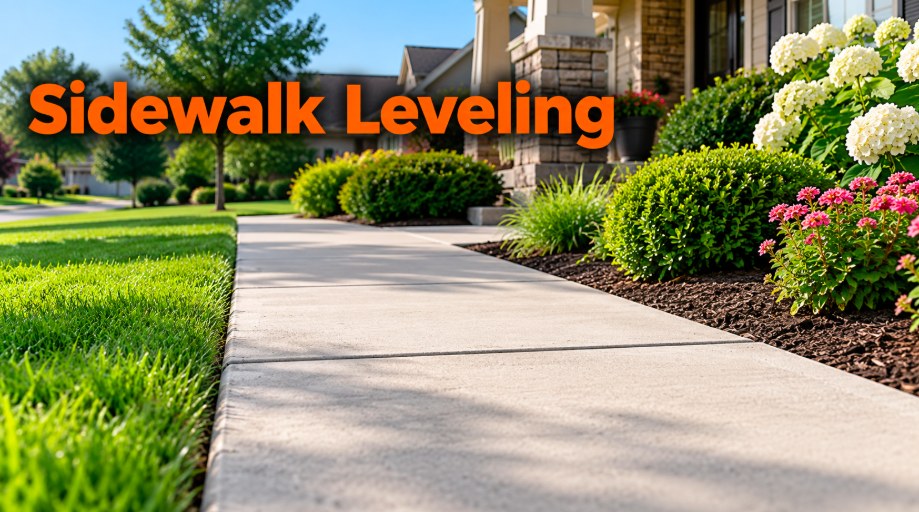
Uneven sidewalks are easy to overlook until someone catches a shoe on a raised joint or rainwater starts collecting in a low section. Sidewalk leveling is a practical method for correcting many settled concrete walkways while keeping usable slabs in place.
Correcting Uneven Concrete Sidewalks
Sidewalks consist of individual concrete sections that can move independently.
One slab may stay almost exactly where it was originally poured while the slab beside it settles an inch or more. This creates an abrupt change in elevation at the joint.
Concrete leveling can raise the lower section so the transition becomes smoother.
The objective is not simply cosmetic. Improving slab alignment can make walking routes safer and help restore proper drainage through yards, entries, commercial properties, and other pedestrian areas.
What Causes Sidewalk Settlement?
Several conditions can contribute to sinking concrete sidewalks.
Soil Erosion
Water moving beneath or along a walkway can slowly remove supporting soil.
Poor Soil Compaction
Fill soil that was not thoroughly compacted before construction may compress under the weight of the concrete.
Tree and Landscaping Conditions
Tree roots may alter nearby soil conditions or contribute to movement between sidewalk slabs.
Water Leaks
Irrigation leaks and broken underground pipes can soften soil or wash it away.
Natural Soil Movement
Expansive soils may shrink and swell as moisture conditions change.
A successful leveling project considers both the visible sidewalk and the conditions surrounding it.
Trip Hazard Reduction
One of the primary reasons property owners request sidewalk leveling is to reduce uneven edges.
A small elevation difference may seem minor from a distance but can become significant for:
- Children
- Older adults
- Visitors
- Delivery workers
- Customers
- People using wheelchairs
- People pushing strollers
- Anyone walking through the area at night
Raising settled slabs can create more consistent transitions without unnecessarily replacing every section of the walkway.
Residential Sidewalk Leveling
Around homes, sidewalks connect driveways, porches, gates, patios, garages, pools, and backyard spaces.
Settlement can develop slowly enough that homeowners become accustomed to stepping over the uneven area.
Leveling can restore a cleaner walking surface while avoiding the appearance difference that often occurs when only one older slab is replaced with new concrete.
Commercial Sidewalk Leveling
Commercial walkways receive frequent pedestrian traffic and often cover larger areas.
Uneven slabs may appear near:
- Storefront entrances
- Office buildings
- Apartment communities
- Restaurants
- Warehouses
- Medical offices
- Parking lots
- Schools
- Common areas
Addressing settlement can improve accessibility and reduce obvious walking hazards around the property.
Sidewalk Drainage Problems
Low sidewalk sections often become small basins.
Water collecting after rain or irrigation can leave dirt, algae, staining, or slippery areas.
Where slab elevations are contributing to the problem, leveling can help restore the intended direction of water movement.
However, nearby downspouts and irrigation should also be checked. Correcting the cause of excessive water exposure may help protect the leveled sidewalk from future settlement.
Can Every Sidewalk Be Leveled?
No repair method is appropriate for every slab.
Concrete leveling tends to work best when the sidewalk remains structurally intact but has shifted vertically.
Replacement may be preferable when a slab is:
- Broken into numerous small pieces
- Severely deteriorated
- Extremely thin
- Heavily displaced by major root growth
- Missing large sections
- Structurally unstable
An inspection allows the condition of each slab to be considered separately.
A Less Disruptive Repair Approach
Removing a sidewalk section requires demolition, hauling concrete away, preparing the base, constructing forms, placing new concrete, and waiting for it to cure.
Leveling existing concrete can often avoid much of that disruption.
Because the original slab remains in place, landscaping, adjacent concrete, and surrounding improvements may also experience less disturbance.
Restore a Safer Walking Surface
Sidewalk settlement usually continues to become more noticeable rather than disappearing on its own.
Leveling existing slabs can reduce trip points, improve drainage, and give walkways a more uniform appearance while avoiding unnecessary concrete replacement.